Jungian Personality Types to MBTI Mapping
2026-03-22
Decoding the Myers-Briggs 'User Interface' to reveal Carl Jung’s original source code and the logic of the 'Business Flag.'
Introduction
AI Content in YouTube
The YouTube algorithm has started including AI generated pop psychology videos in my YouTube feed. It’s getting annoying. For example, here’s one claiming to be from Dr. Ramani. What a Narcissist Fears Most After Hurting Someone Who Gave Them Everything || Dr. Ramani What strikes me about this Dr. Ramani video is the books on the bookshelf. None of the books have titles on the spine!
AI generated content about MBTI (Myers Briggs Type Indicator) personality types and Carl Jung’s personality types have started hitting my YouTube feed as well. Some of these AI generated videos attribute things to Carl Jung that Jung did not mention in his original publications. Some content creators call out what Carl Jung’s ideas were and what liberties were taken. Here’s some examples:
- Intuitive Introverts Are Disappearing from Society (Here’s the Reason)
- This is Why SIGMA INFJ detach emotionally according to Carl Jung
- The Most Dangerous Empath Is the One With an INTJ:INFJ Brain | Carl Jung Psychology
- The Most Dangerous Empath Is the One With an INFJ Brain | Carl Jung
In the middle of those AI generated pop psychology videos, sometimes the YouTube algorithm nails it. Afroman Trial was Crazy. Cops execute search warrant on Afroman’s home on trumped up charges, find nothing, get recorded on Afroman’s security cameras. Afroman makes music videos mocking these cops. Cops sue Afroman for defamation. Afroman goes to court, claims freedom of speech, and wins! The whole trial was comedy gold. lol
MBTI
Wikipedia: Myers Briggs Type Indicator
The MBTI Personality Type videos in my YouTube feed reminded me that I still don’t fully understand the 16 types, or how to determine which type I align with. I know a little about Jung’s ideas from online research, but I never studied his work explicitly. I figured I’d investigate Carl Jung’s personality types and compare Jung’s ideas with the MBTI system.
What I found surprisingly challenging was mapping the 16 MBTI types to the 8 personality types that Carl Jung proposed. I determined that my MBTI type was likely either INTJ, INTP or INFJ and I wanted to understand the differences using Jung’s ideas on personality types.
INTJ and INTP look like they should be very similar, but looks can be deceiving. INTJ maps to Introverted Intuition (Ni), but INTP maps to Introverted Thinking (Ti). INTJ and INFJ are actually more alike than INTJ and INTP, since INTJ and INFJ both map to Introverted Intuition (Ni). These differences don’t make intuitive sense to me.
In this post I’ll explain how I made sense of mapping between the MBTI personality types and the Jungian personality types.
Carl Jung’s Personality Types
References
Personality Type System
I found understanding Carl Jung’s personality types, psychological types, and cognitive functions to be conceptually straightforward to understand, with rules that follow simple logic.
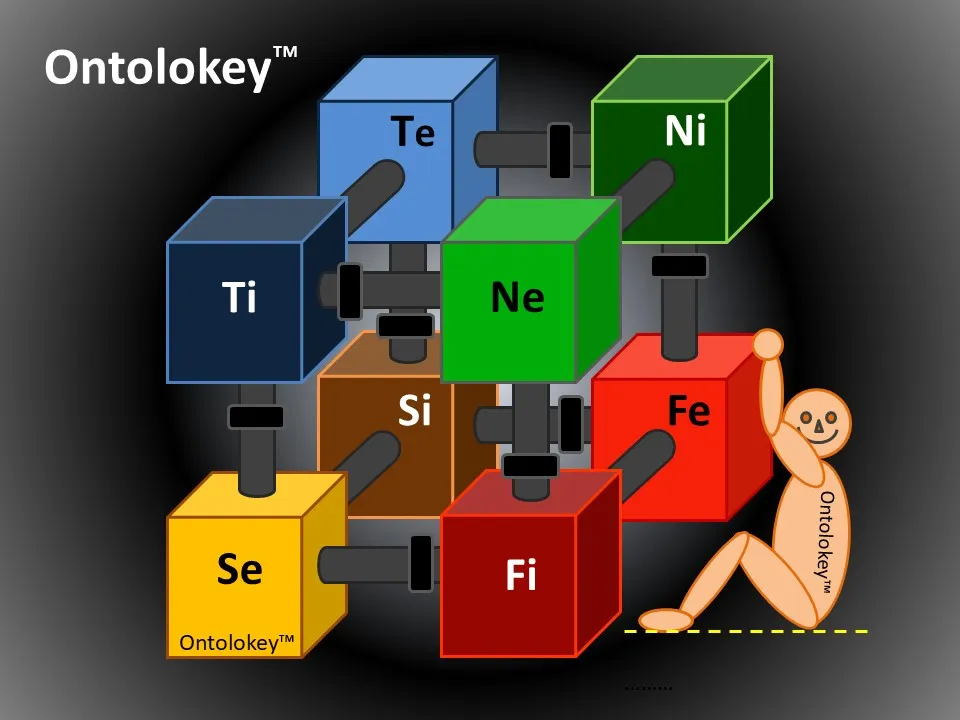
A personality type is made up of 4 cognitive functions Thinking, Feeling, Sensation and Intuition, and each cognitive function has an attitude type: extraversion or introversion. These 4 cognitive functions are ordered
- Conscious
- Primary (aka Dominant)
- Auxiliary
- Subconscious
- Tertiary
- Inferior
There are eight personality types determined by which cognitive function is primary and its corresponding attitude type (introverted or extraverted).
The symbols for the 8 personality types are also simple to understand. The letter corresponding to the cognitive function (T, F, S, N) followed by the first letter of the attitude type of the primary function (i, e).
| Personality Type | Symbol | Indication |
|---|---|---|
| Introverted Thinking | Ti | Influenced by ideas, independent, often fearful of intimacy. |
| Introverted Feeling | Fi | Sympathetic, pleases others, may be dependent, reserved. |
| Introverted Sensation | Si | Calm and passive, restrained, controlled and controlling. |
| Introverted Intuition | Ni | Mystical, dreamer and artist. Can be obsessive. |
| Extraverted Thinking | Te | Principled, idealistic, objective, rational. |
| Extraverted Feeling | Fe | Adaptive, relating well to the external. |
| Extraverted Sensation | Se | Realistic, concrete, pleasant and friendly. |
| Extraverted Intuition | Ne | Enterprising, outgoing, can be irresponsible. |
Rules
Primary/Auxiliary functions are conscious, Tertiary/Inferior subconscious.
The cognitive function pair Thinking/Feeling are known as Judging (aka Rational) functions.
The cognitive function pair Sensation/ Intuition are known as Perceiving (aka Irrational) functions.
Opposing Dominant & Inferior Cognitive Functions
The Dominant and Inferior cognitive functions are opposing: the pairs Thinking/Feeling or Sensation/Intuition are the Dominant/Inferior functions and they have different attitude types. For example, if the Dominant function is Introverted Intuition (Ni), the Inferior function is Extraverted Sensation (Se).
Opposing Auxiliary & Tertiary Cognitive Functions
The Auxiliary and Tertiary cognitive functions are also opposing, using the same logic as Dominant and Inferior. For example, if the Auxiliary function is Extraverted Thinking (Te), the Tertiary function is Introverted Feeling (Fi).
Opposing Dominant & Auxiliary Cognitive Functions
The Dominant and Auxiliary cognitive functions are also opposing, with a small difference: one is from the Judging functions Thinking/Feeling and the other from the Perceiving functions Sensation/Intuition, and Dominant/Auxiliary functions must have different attitude types.
Opposing Tertiary & Inferior Cognitive Functions
The same opposing rules for Dominant/Auxiliary cognitive functions apply to Tertiary/Inferior cognitive functions.
Understanding Personality Type Cognitive Functions
The 8 personality types are uniquely defined by the Primary (aka Dominant) cognitive function and its attitude type. Consider Introverted Intuition (Ni) as an example. What are its 4 cognitive functions?
The Inferior function must be the opposite of Intuition, which is Sensation, and since the Primary (Dominant) function Intuition is introverted, the Inferior function must be Extraverted.
- Primary: Introverted Intuition (Ni)
- Auxiliary: ?
- Tertiary: ?
- Inferior: Extraverted Sensation (Se)
What about the Auxiliary and Tertiary functions? The same rules of opposing pairs limits these values. Auxiliary function must have attitude type Extraverted and be one of the Judging (Rational) functions Thinking/Feeling, therefore Auxiliary must be Extraverted Thinking (Te) or Extraverted Feeling (Fe). Tertiary must have attitude type Introverted and must be the other Judging (Rational) function, therefore Tertiary must be Introverted Feeling (Fi) or Introverted Thinking (Ti).
- Primary: Introverted Intuition (Ni)
- Auxiliary: Extraverted Thinking (Te) or Extraverted Feeling (Fe)
- Tertiary: Introverted Feeling (Fi) or Introverted Thinking (Ti)
- Inferior: Extraverted Sensation (Se)
Personality Type Cognitive Functions
Here’s the breakdown of each of the 8 personality types into the 4 cognitive functions. What stands out to me is the “opposing” nature of the cognitive types. I read the table by comparing the Primary and Inferior columns, then comparing the Auxiliary and Tertiary columns. This “opposing” nature to me is a sort of inverse function, where both the cognitive function and the director are being “inverted”: T <-> F, S <-> N, i <-> e.
| Personality Type | Primary | Auxiliary | Tertiary | Inferior |
|---|---|---|---|---|
| Introverted Thinking | Ti | Se or Ne | Ni or Si | Fe |
| Introverted Feeling | Fi | Se or Ne | Ni or Si | Te |
| Introverted Sensation | Si | Te or Fe | Fi or Ti | Ne |
| Introverted Intuition | Ni | Te or Fe | Fi or Ti | Se |
| Extraverted Thinking | Te | Si or Ni | Ne or Se | Fi |
| Extraverted Feeling | Fe | Si or Ni | Ne or Se | Ti |
| Extraverted Sensation | Se | Ti or Fi | Fe or Te | Ni |
| Extraverted Intuition | Ne | Ti or Fi | Fe or Te | Si |
Personality Type Cognitive Functions - Extended
Jung defined 8 personality types from the combination of the 4 cognitive functions and 2 attitude types. These 8 personality types do not specify the Auxiliary / Tertiary cognitive functions. For completeness, here’s the expanded set of personality types where the Auxiliary and Tertiary cognitive functions are specified.
| Primary | Auxiliary | Tertiary | Inferior | Personality Type |
|---|---|---|---|---|
| Ti | Se | Ni | Fe | Introverted Thinking (Ti) |
| Ti | Ne | Si | Fe | Introverted Thinking (Ti) |
| Fi | Se | Ni | Te | Introverted Feeling (Fi) |
| Fi | Ne | Si | Te | Introverted Feeling (Fi) |
| Si | Te | Fi | Ne | Introverted Sensation (Si) |
| Si | Fe | Ti | Ne | Introverted Sensation (Si) |
| Ni | Te | Fi | Se | Introverted Intuition (Ni) |
| Ni | Fe | Ti | Se | Introverted Intuition (Ni) |
| Te | Si | Ne | Fi | Extraverted Thinking (Te) |
| Te | Ni | Se | Fi | Extraverted Thinking (Te) |
| Fe | Si | Ne | Ti | Extraverted Feeling (Fe) |
| Fe | Ni | Se | Ti | Extraverted Feeling (Fe) |
| Se | Ti | Fe | Ni | Extraverted Sensation (Se) |
| Se | Fi | Te | Ni | Extraverted Sensation (Se) |
| Ne | Ti | Fe | Si | Extraverted Intuition (Ne) |
| Ne | Fi | Te | Si | Extraverted Intuition (Ne) |
MBTI System
Wikipedia: Myers Briggs Type Indicator
The MBTI System is made up of 16 4 letter types. For example, INTJ. Each of the 4 letters has 2 possible values, for a total of 16 combinations (2^4).
- Introversion (I) / Extroversion (E)
- Sensation (S) / Intuition (N)
- Thinking (T) / Feeling (F)
- Judging (J) / Perceiving (P)
Mapping MBTI to Personality Types
In the Jungian system, the 8 personality types describe the dominant cognitive function and whether that is Introverted or Extraverted.
The key to unlocking the MBTI system is understanding that the 4th letter (J or P) is what I call the “business flag”. It indicates which of the two cognitive functions (as indicated by the middle 2 letters) is Extraverted.
If a personality type is Extraverted (E), the dominant cognitive function is extraverted, and the 4th letter points to the Primary (Dominant) cognitive function.
However, if a personality type is Introverted (I), the dominant cognitive function is introverted, and the 4th letter points to the Auxiliary function.
Mapping Example
Let’s consider an example: INTJ
The fourth letter is J, which means that the Judging cognitive function is Extraverted. The 2 cognitive functions in the INTJ type are N (Intuition) and T (Thinking). Intuition is a Perceiving function and Thinking is a Judging function. Therefore, Thinking is the Extraverted cognitive function, which means the other cognitive function (Intuition) must be Introverted.
The Jungian Personality Type for INTJ looks like this
- Primary: Intuition (Introverted)
- Auxiliary: Thinking (Extraverted)
- Tertiary: Feeling (Introverted)
- Inferior: Sensation (Extraverted)
MBTI to Personality Type Mapping
| MBTI Type | Personality Type | Primary | Auxiliary | Tertiary | Inferior | Name |
|---|---|---|---|---|---|---|
| ISTJ | Introverted Sensation | Si | Te | Fi | Ne | Logistician/Inspector |
| ISTP | Introverted Thinking | Ti | Se | Ni | Fe | Virtuoso/Craftsman |
| ISFJ | Introverted Sensation | Si | Fe | Ti | Ne | Defender/Nurturer |
| ISFP | Introverted Feeling | Fi | Se | Ni | Te | Adventurer/Composer |
| INTJ | Introverted Intuition | Ni | Te | Fi | Se | Architect/Mastermind |
| INTP | Introverted Thinking | Ti | Ne | Si | Fe | Logician/Thinker |
| INFJ | Introverted Intuition | Ni | Fe | Ti | Se | Advocate/Counselor |
| INFP | Introverted Feeling | Fi | Ne | Si | Te | Mediator/Healer |
| ESTJ | Extraverted Thinking | Te | Si | Ne | Fi | Executive/Supervisor |
| ESTP | Extraverted Sensation | Se | Ti | Fe | Ni | Entrepreneur/Doer |
| ESFJ | Extraverted Feeling | Fe | Si | Ne | Ti | Consul/Provider |
| ESFP | Extraverted Sensation | Se | Fi | Te | Ni | Entertainer/Performer |
| ENTJ | Extraverted Thinking | Te | Ni | Se | Fi | Commander/Leader |
| ENTP | Extraverted Intuition | Ne | Ti | Fe | Si | Debater/Visionary |
| ENFJ | Extraverted Feeling | Fe | Ni | Se | Ti | Protagonist/Teacher |
| ENFP | Extraverted Intuition | Ne | Fi | Te | Si | Campaigner/Champion |
MBTI to Personality Type Mapping - Ordered by Personality Type
| MBTI Type | Personality Type | Primary | Auxiliary | Tertiary | Inferior | Name |
|---|---|---|---|---|---|---|
| ISTP | Introverted Thinking | Ti | Se | Ni | Fe | Virtuoso/Craftsman |
| INTP | Introverted Thinking | Ti | Ne | Si | Fe | Logician/Thinker |
| ISFP | Introverted Feeling | Fi | Se | Ni | Te | Adventurer/Composer |
| INFP | Introverted Feeling | Fi | Ne | Si | Te | Mediator/Healer |
| ISTJ | Introverted Sensation | Si | Te | Fi | Ne | Logistician/Inspector |
| ISFJ | Introverted Sensation | Si | Fe | Ti | Ne | Defender/Nurturer |
| INTJ | Introverted Intuition | Ni | Te | Fi | Se | Architect/Mastermind |
| INFJ | Introverted Intuition | Ni | Fe | Ti | Se | Advocate/Counselor |
| ESTJ | Extraverted Thinking | Te | Si | Ne | Fi | Executive/Supervisor |
| ENTJ | Extraverted Thinking | Te | Ni | Se | Fi | Commander/Leader |
| ESFJ | Extraverted Feeling | Fe | Si | Ne | Ti | Consul/Provider |
| ENFJ | Extraverted Feeling | Fe | Ni | Se | Ti | Protagonist/Teacher |
| ESTP | Extraverted Sensation | Se | Ti | Fe | Ni | Entrepreneur/Doer |
| ESFP | Extraverted Sensation | Se | Fi | Te | Ni | Entertainer/Performer |
| ENTP | Extraverted Intuition | Ne | Ti | Fe | Si | Debater/Visionary |
| ENFP | Extraverted Intuition | Ne | Fi | Te | Si | Campaigner/Champion |
MBTI to Personality Type Mapping - Ordered by Functional Pair
| MBTI Type | Personality Type | Primary | Auxiliary | Tertiary | Inferior | Name |
|---|---|---|---|---|---|---|
| ISTP | Introverted Thinking | Ti | Se | Ni | Fe | Virtuoso/Craftsman |
| ISTJ | Introverted Sensation | Si | Te | Fi | Ne | Logistician/Inspector |
| ESTP | Extraverted Sensation | Se | Ti | Fe | Ni | Entrepreneur/Doer |
| ESTJ | Extraverted Thinking | Te | Si | Ne | Fi | Executive/Supervisor |
| ISFP | Introverted Feeling | Fi | Se | Ni | Te | Adventurer/Composer |
| ISFJ | Introverted Sensation | Si | Fe | Ti | Ne | Defender/Nurturer |
| ESFP | Extraverted Sensation | Se | Fi | Te | Ni | Entertainer/Performer |
| ESFJ | Extraverted Feeling | Fe | Si | Ne | Ti | Consul/Provider |
| INTP | Introverted Thinking | Ti | Ne | Si | Fe | Logician/Thinker |
| INTJ | Introverted Intuition | Ni | Te | Fi | Se | Architect/Mastermind |
| ENTP | Extraverted Intuition | Ne | Ti | Fe | Si | Debater/Visionary |
| ENTJ | Extraverted Thinking | Te | Ni | Se | Fi | Commander/Leader |
| INFP | Introverted Feeling | Fi | Ne | Si | Te | Mediator/Healer |
| INFJ | Introverted Intuition | Ni | Fe | Ti | Se | Advocate/Counselor |
| ENFP | Extraverted Intuition | Ne | Fi | Te | Si | Campaigner/Champion |
| ENFJ | Extraverted Feeling | Fe | Ni | Se | Ti | Protagonist/Teacher |
Personality Type to MBTI Mapping
| Personality Type | Primary | Auxiliary | Tertiary | Inferior | MBTI Type |
|---|---|---|---|---|---|
| Introverted Thinking (Ti) | Ti | Se | Ni | Fe | ISTP |
| Introverted Thinking (Ti) | Ti | Ne | Si | Fe | INTP |
| Introverted Feeling (Fi) | Fi | Se | Ni | Te | ISFP |
| Introverted Feeling (Fi) | Fi | Ne | Si | Te | INFP |
| Introverted Sensation (Si) | Si | Te | Fi | Ne | ISTJ |
| Introverted Sensation (Si) | Si | Fe | Ti | Ne | ISFJ |
| Introverted Intuition (Ni) | Ni | Te | Fi | Se | INTJ |
| Introverted Intuition (Ni) | Ni | Fe | Ti | Se | INFJ |
| Extraverted Thinking (Te) | Te | Si | Ne | Fi | ESTJ |
| Extraverted Thinking (Te) | Te | Ni | Se | Fi | ENTJ |
| Extraverted Feeling (Fe) | Fe | Si | Ne | Ti | ESFJ |
| Extraverted Feeling (Fe) | Fe | Ni | Se | Ti | ENFJ |
| Extraverted Sensation (Se) | Se | Ti | Fe | Ni | ESTP |
| Extraverted Sensation (Se) | Se | Fi | Te | Ni | ESFP |
| Extraverted Intuition (Ne) | Ne | Ti | Fe | Si | ENTP |
| Extraverted Intuition (Ne) | Ne | Fi | Te | Si | ENFP |
My Confusion with the MBTI System
Hidden Complexity
The MBTI system looks simple on the surface. 4 characters, each with only 2 possibilities, resulting in 16 (2^4) combinations. The MBTI systems online generally include the 2 letter abbreviation for the Jungian Personality Type, and this is where my confusion comes from.
My problem is that there is no ordering of the MBTI Types that allows me to reason sensibly about the underlying personality types.
The MBTI system does not make logical sense if you are trying to look at the 16 types through the lens of Jungian personality types if you are expecting there to be some straight forward meaning of the abbreviations.
The Business Flag: J/P
The addition of the J/P letter to indicate which cognitive function is extraverted is the likely source of my confusion. Perhaps this is the packaging of the Jungian personality type system that allows for usage in a business setting where people are looking for observable behavior, instead of trying to understand the primary cognitive function.
In this system, extroverts’ observable cognitive function is their primary cognitive function. Introverts on the other hand have an extraverted auxiliary cognitive function, while their primary cognitive function is introverted. Introverts seem to be at a disadvantage in the business setting if they are being evaluated based on their auxiliary cognitive function because it’s observable.
It seems to me that the J/P flag functions as a “business flag”, indicating which cognitive function is observable.