Intent, Impact, and Emotional Blackmail
2026-07-28
Using AI and analytical frameworks to process messaging intent and impact
Imagine receiving this text message from your dad.
Happy 50th Anniversary to us. Lol
Your mother had her stent done yesterday and had a rough time.
She has her chemo tomorrow .
What she is hoping if you are free Saturday afternoon and want to drop by, we’ll buy the Chicken.
What emotions do you feel, or imagine you might feel, if you received such a text message? I felt overcome by anger reading the first line of that text when it popped up on my phone. After waiting a few minutes for my anger to subside, it was quickly replaced by sadness, then fear, then anger all over again.
How you might react to such a message depends on many factors such as any history of similar types of messages, the context of this particular message, your ability to self-regulate your emotions, any unhealed core wounds you might have, your perceived consequences to any responses (or lack thereof), etc.
Before reacting with strong emotions, it is helpful to do some analysis on the message to gain insight into its intent, and understand the methods used in this message to influence our behaviour.
Let’s start with what should be a simple question: What is the purpose of this text message? At a cursory glance, it seems like an invitation to a party to celebrate a milestone event: your parents’ 50th wedding anniversary. It also functions as a health update on your mom’s serious medical condition. It’s literally mixed messages: mixing the joyous occasion of a milestone anniversary, with a potentially life-threatening medical condition update sandwiched between the event details and the invitation.
Next, let’s consider who is inviting us? Is it dad, or is it mom? It would appear from the last sentence that it’s mom. What does dad want? It’s not specified in the text. It’s technically an invitation since it includes when and where, and mentions me “dropping by”.
It’s possible this is good ol’ dad’s writing style, and there was no manipulative intent. A single text message isn’t enough on its own to deduce intent. However, due to the jarring emotional tone shifts in this message, it’s worth evaluating further.
To maintain objectivity and avoid passing immediate value judgements, I turned to AI for an impartial textual analysis. I used three different frameworks to evaluate this message, prompting Gemini 3.1 Pro to break down the mechanics of the text. Here are the unedited prompts I used and the AI’s analysis.
1. FOG (Fear, Obligation, Guilt)
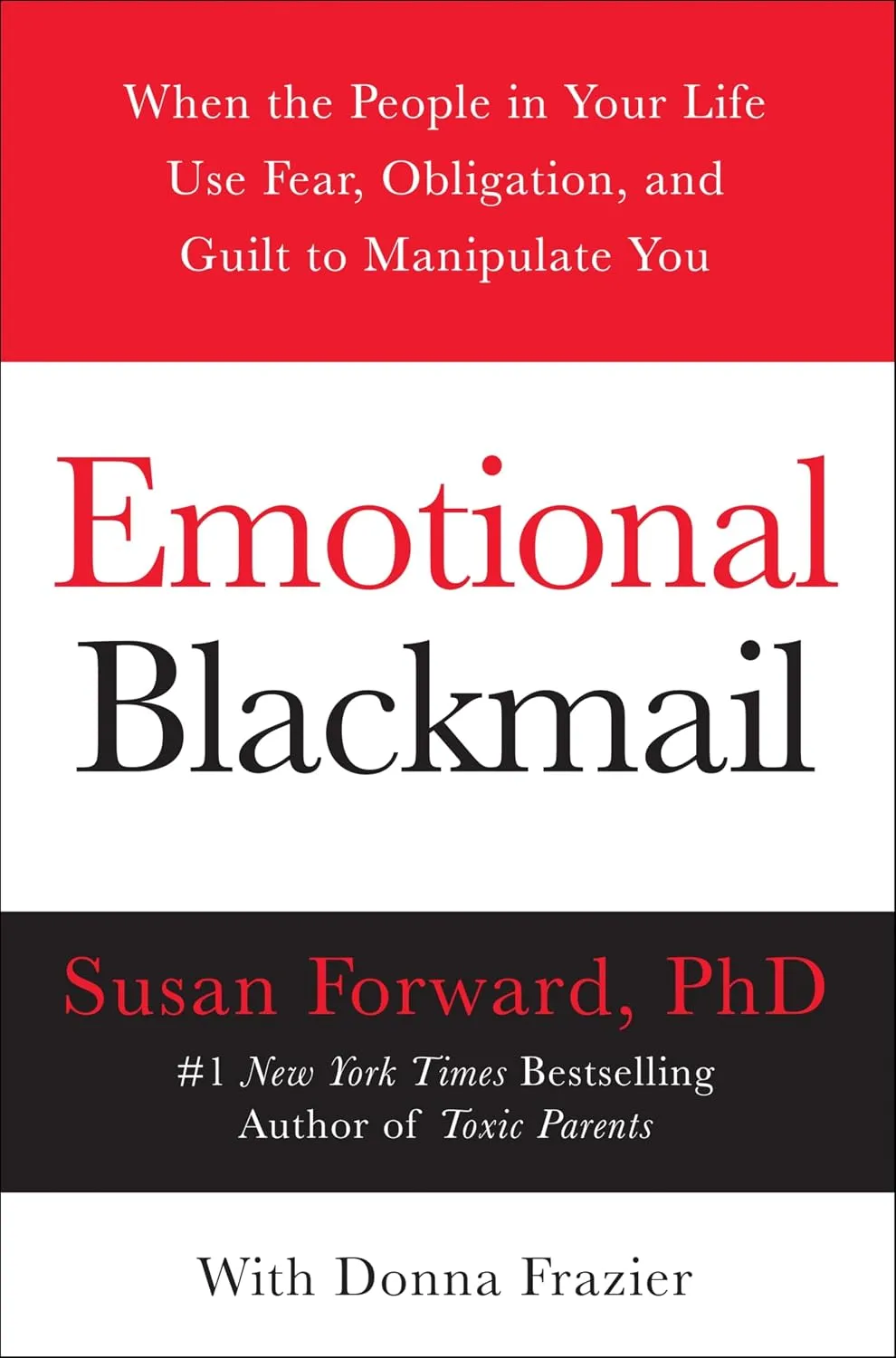
The FOG model is outlined in the book Emotional Blackmail: When the People in Your Life Use Fear, Obligation, and Guilt to Manipulate You. I wanted to see how these specific levers were being pulled.
My Prompt:
Can you analyze this text message using the FOG (Fear, Obligation, Guilt) model?
“Happy 50th Anniversary to us. Lol Your mother had her stent done yesterday and had a rough time. She has her chemo tomorrow . What she is hoping if you are free Saturday afternoon and want to drop by, we’ll buy the Chicken.”
Gemini’s Analysis: This is a textbook example of how the FOG (Fear, Obligation, Guilt) dynamic operates in interpersonal communication. Coined by psychotherapist Susan Forward, the FOG model describes how “emotional blackmail” is used to make a person comply with a request by creating a dense, uncomfortable emotional atmosphere.
Here is a breakdown of how the mechanics of Fear, Obligation, and Guilt are functioning beneath the surface of this short message.
Guilt: The Hook
“Happy 50th Anniversary to us. Lol” The Subtext: Guilt is the primary driver in this text, and it starts immediately. Assuming this is the sender’s (presumably your parents’) anniversary, opening with this highlights a milestone that you presumably missed, forgot, or chose not to acknowledge.
- Adding “Lol” attempts to frame it as a casual joke, giving the sender plausible deniability (“I was just joking!”). However, its actual function is passive-aggressive—it softens the delivery while firmly planting the seed of guilt right at the start.
Fear: The Escalation
“Your mother had her stent done yesterday and had a rough time. She has her chemo tomorrow .” The Subtext: In the FOG model, fear isn’t always about being afraid of physical danger or someone’s anger; it is often the fear of loss, the fear of tragedy, or the existential fear of a parent’s mortality.
- By dropping two massive pieces of medical news back-to-back—a difficult heart procedure and an impending chemotherapy session—the sender creates a sudden, intense spike of anxiety.
- You are meant to feel afraid for her life and well-being. This puts you in a highly vulnerable emotional state, making it much harder to say “no” to whatever comes next.
Obligation: The Trap
“What she is hoping if you are free Saturday afternoon and want to drop by, we’ll buy the Chicken.” The Subtext: Now that the emotional groundwork of Guilt and Fear has been laid, the sender delivers the actual request.
- “Your mother” / “She is hoping”: This weaponizes your familial duty. It shifts the burden of a sick, suffering woman’s happiness directly onto your shoulders. If you don’t visit, you are denying a mother who just had a “rough time” with surgery and chemo.
- “We’ll buy the Chicken”: This is the ultimate sweetener, designed to make the request look harmless and generous. It contrasts the extreme weight of the medical news with a casual offer of food.
The Overall Strategy: This text uses a classic emotional stacking technique. If the sender had simply texted, “Do you want to come over for chicken on Saturday?” you could easily say yes or no based on your schedule or boundaries. Instead, the sender stacked a forgotten milestone (Guilt) and severe medical distress (Fear) right on top of the invitation (Obligation). The FOG model is effective because it removes your agency. It is designed to make declining the invitation feel morally indefensible.
2. FATE (Focus, Authority, Tribe, Emotions)
Next, I used Chase Hughes’ FATE Model to decode the psychological posture of the sender.
My Prompt:
Can you analyze this message using Chase Hughes FATE Model of Focus, Authority, Tribe, Emotions?
Gemini’s Analysis: This model helps decode the underlying psychological posture of the sender by examining where their attention is directed, how they handle power dynamics, their relationship to the group, and their baseline emotional state.
Focus
Where the sender’s attention is directed:
- External and Time-Bound: The sender’s focus is entirely externalized onto the mother’s situation and specific timelines. It shifts rapidly from a macro milestone to the immediate past, the immediate future, and finally to the recipient’s schedule.
- Self-Minimization: The sender’s own internal state is notably absent. Aside from the collective “us,” the sender acts strictly as a reporter or messenger for the mother’s experiences and desires.
Authority
How the sender relates to control and power dynamics:
- Low-Authority / Deferential: The sender takes a highly submissive posture regarding the invitation. Instead of a direct parental request, the request is padded with multiple layers of permission-seeking: “What she is hoping,” “if you are free,” and “want to drop by.”
- Displaced Authority: By framing the invitation as “What she is hoping,” the sender removes themselves from the request entirely, shifting the onus onto the sick mother.
- Transactional Sweetener: The addition of “we’ll buy the Chicken” is an attempt to balance the scales. When a person feels they lack the inherent authority to summon someone, they often offer a transactional incentive to make the request easier to accept.
Tribe
How the sender views social standing and connection:
- Appealing to the Core Unit: The opening line immediately anchors the conversation in the longevity and survival of the core family unit.
- Tribal Fragility: Despite the heavy medical crisis, the sender does not assume tribal cohesion. The extreme caution used in the invitation suggests a perceived distance or a fear of overstepping boundaries. They are asking for the tribe to gather, but they do not feel confident assuming the tribe will gather.
Emotions
The underlying emotional state and how it is managed:
- Stress Masked by Deflection: The juxtaposition of a 50th anniversary, an immediate “Lol,” and then severe medical news points to high anxiety managed through emotional compartmentalization and dry humor. The “Lol” acts as a pressure release valve.
- Vulnerability and Fear of Rejection: The timid framing of the Saturday visit reveals a deep vulnerability. The sender is navigating a high-stress medical situation but is simultaneously managing a fear of being a burden or facing rejection.
3. Aristotle’s Modes of Persuasion
Finally, I wanted to look at the mechanics of the text purely as a piece of rhetoric using Aristotle’s Modes of Persuasion.
My Prompt:
Can you analyze the following message using Aristotle’s modes of persuasion Ethos, Pathos, and Logos?
Gemini’s Analysis: This message is a masterful piece of everyday rhetoric. It seamlessly blends heavy medical news with a practical request, using all three of Aristotle’s modes of persuasion to maximize the chances of a “yes.”
Ethos: Relational Authority and Proximity
- “Happy 50th Anniversary to us.” This immediately establishes the sender’s longevity, stability, and position as a family patriarch/matriarch.
- Proximity to the crisis: Delivering first-hand medical updates (“had her stent done yesterday”) establishes them as the authoritative gatekeeper of the mother’s health status, giving their request on her behalf significant weight.
Pathos: Sympathy and Situational Irony
- The Medical One-Two Punch: “rough time” with the stent, followed immediately by “chemo tomorrow.” This elicits deep sympathy and concern, painting a picture of a woman who is physically suffering, making it incredibly difficult to say no.
- The “Lol” Contrast: Opening a message about stents and chemotherapy with dark humor cuts the tension. It shows a stoicism in the face of a grim reality, which often makes the recipient feel even more empathetic.
Logos: The Practical Proposition
Underneath the emotional weight, the sender constructs a very practical, transactional argument.
- The Timeline: Stent yesterday + Chemo tomorrow = Exhaustion by Saturday. The logic dictates that the mother will not be in a condition to host or cook.
- Lowering the Friction: “we’ll buy the Chicken” is the crux of the logical argument. The sender knows they are asking the recipient to give up their Saturday afternoon. It is a practical exchange: Bring us your time and company, and we will subsidize the food.
Separating Intent from Impact
The impact of the message (highlighted by the FOG and Aristotle breakdowns) is highly manipulative. It corners you, removes your agency, and uses guilt and fear to force compliance. My initial anger was a valid, healthy response to having my boundaries bypassed by this emotional stacking.
However, the intent of the message (highlighted by the FATE breakdown) reveals a different reality. The sender isn’t a calculating mastermind. My dad is likely operating from a place of intense fear and vulnerability. He is navigating a high-stress medical situation, feels entirely out of control regarding his wife’s health, and is desperately trying to manufacture control by ensuring his child visits. Because he lacks the emotional vocabulary to simply say, “I am terrified about your mom and I really need you here,” he clumsily weaponized guilt and obligation.
The Fine Line: Persuasion vs. Manipulation
When you look at Aristotle’s modes alongside the FOG model, you realize how thin the line is between persuasion and manipulation. Both use emotion (Pathos) and logic (Logos) to influence behavior.
So how do you use these frameworks to determine if a message is actually manipulation dressed up as persuasion?
You test the agency.
Persuasion presents a compelling case but leaves the recipient’s agency completely intact. They have the freedom to say “no” without facing a manufactured emotional penalty. Manipulation, on the other hand, obscures its true intent and penalizes the “no.”
If a logical proposition is presented (“we’ll buy the chicken”), but declining it triggers a trapdoor of guilt and fear (“you are abandoning your sick mother on her anniversary”), it is manipulation. The logic is just a decoy to make the trap look like a choice.
The Core of Emotional Blackmail
At its core, emotional blackmail is extortion. A healthy message is a request; it leaves room for you to safely say “no.” An emotional blackmail message is a demand carrying a hidden, highly destructive penalty if you refuse.
When evaluating a message, pay attention to feelings and sensations arising in your body, and the emotions you are labeling those feelings or sensations as (That’s the E in FATE / Pathos). Then, ask yourself this single litmus test question:
“What happens if I say no to this?”
- If the answer is that the person will respect your “no” and manage their own disappointment, it is a healthy request.
- If the answer is that they will punish you, smear your name, threaten access to your children, or accuse you of destroying their health, it is emotional blackmail.
Here are the four primary mechanics often found in emotional blackmail messages:
Threat
The sender makes it clear that your autonomy has a price. The threat can be explosive, or it can be delivered as a cold, calculated warning.
- The Tell: “If you do X, then I will make sure Y happens to you.”
- The Reality: A co-parent warning that proceeding with legal mediation means you will lose your child, or a parent stating that if you enforce a boundary, they will cut you off from family medical updates.
Leverage
When they cannot control you directly, they grab something you deeply care about and use it as leverage. They treat your empathy as a security flaw to be exploited.
- The Tell: Injecting a vulnerable third party into a two-person disagreement.
- The Reality: A parent using a spouse’s declining health to force you to comply with a demand to visit.
Responsibility Transfer
The sender refuses to manage their own emotions or physical state, so they make you entirely responsible for them. If they are unhappy, sick, or angry, it is explicitly treated as your fault.
- The Tell: “Look what you are doing to me.”
- The Reality: A parent claiming that your behavior—specifically your boundaries—is what is physically making them or another family member sick.
“Role” Expectations
They stop communicating with you as an independent adult and instead demand compliance based on an assigned family role (e.g., The Good Son, The Peacekeeper). If you step out of the role, you are defective.
- The Tell: “Family is supposed to…” or “You just need to be the bigger person.”
- The Reality: A sibling texting that a toxic parent is “just worried” and hoping you’ll “give them time”—a message designed to obligate you into absorbing abuse just to keep the family system quiet.
Linting Your Own Communications
We don’t just receive these kinds of messages; sometimes, we send them. When we are stressed, afraid, or feeling a lack of control, it is incredibly easy to fall into these same anti-patterns.
You can use these exact same frameworks as a pre-commit hook for your own communications. Before you hit send on a highly charged or critical message, run it through the parser to evaluate your intentions and expected outcomes:
- Analyze your intention: What is the root cause of this message? Am I communicating from a place of fear, stress, or vulnerability (FATE)? If so, am I owning that, or am I hiding it behind a decoy request?
- Evaluate the expected outcome: What exactly do I want the recipient to do? Am I asking them directly, or am I engineering a scenario where they are forced to comply?
- Check for FOG: Am I leveraging Fear, Obligation, or Guilt to secure my desired outcome? If they say no, will I punish them for it?
Clear, well-optimized code doesn’t rely on hidden side effects to function. Your communication shouldn’t either. By analyzing the structural logic of the messages we both send and receive, we can strip out the emotional blackmail, protect our boundaries, and ensure our impact actually matches our intent.