Nervous System Observability
2026-02-08
Applying observability principles to my own nervous system
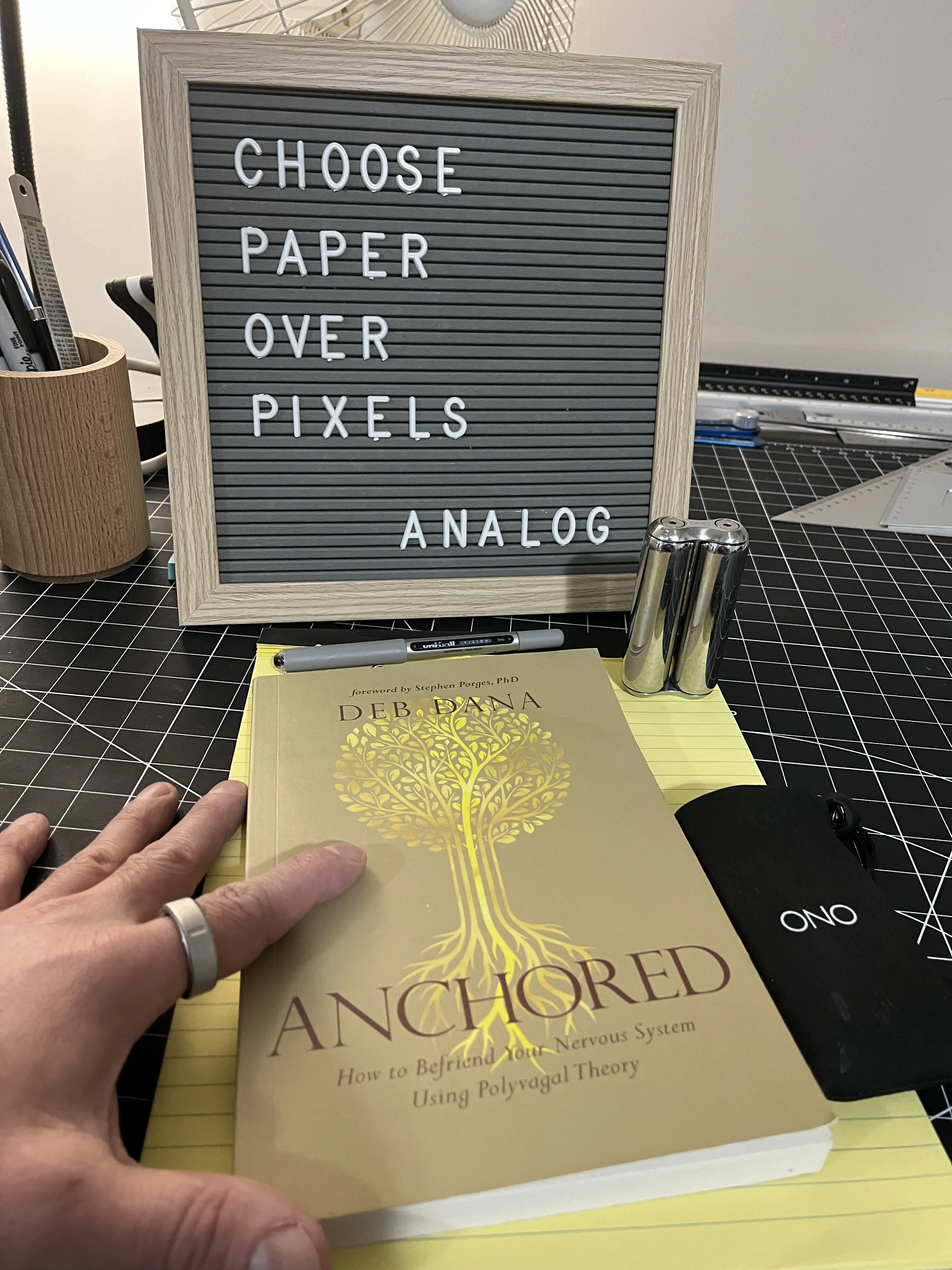
I have been focused on observability in my role for the last few years. While working through my Cornell Engineering Leadership Program, I decided to experiment with applying observability principles to my own nervous system.
While trying to get a handle on my nervous system regulation, I started tracking it in an ad-hoc fashion, mainly through journaling at the end of the day.
I experimented with using Excel spreadsheets to track this more granularly, but that quickly became a pain. I would simply forget to track the data when I was stressed.
I researched wearable biometric devices that could measure nervous system activation and found that the Oura Ring 4 was the best fit for me, specifically due to its Heart Rate Variability (HRV) monitoring.
HRV is the variance in time between heartbeats.
- Under stress, heart rate increases, the latency between beats decreases, and HRV decreases.
- When recovering, heart rate decreases, latency increases, and HRV increases.
To interpret that data, I picked up the book Anchored by Deb Dana, which is based on the Polyvagal Theory work of Dr. Stephen Porges.
Then there was the fidgeting. I noticed that in meetings, I would take two markers from the center of the table and twirl them around in my hands. It was very satisfying, but also very distracting for others.
I am a huge fan of the Cutting Edge Engineering YouTube channel, so I figured someone must have made a fidget that used precision machining to mimic that “two markers” feeling. The Ono Stainless Steel Roller was exactly what I was looking for. It’s very satisfying. A nice conversation starter too!
Finally, I realized I tend to turn to my laptop or phone when I’m zoning out or coping with anxiety. Reading headlines, doom scrolling, or doing work during meetings wasn’t regulating my nervous system—it was just adding noise.
I came up with a “Choose Paper Over Pixels” idea to limit those distractions.
In meetings, I switched to pen and paper so I wouldn’t miss important details. Even at home, I find thinking with pen and paper helps me think more clearly. I’m not tempted to jump over to a new browser tab to “look something up.”
Writing things from memory helps limit the noise in my thinking, ensuring I’m not jumbling someone else’s thoughts with my own.
Original LinkedIn post.